 by
by Introduction
You click publish, wait… and nothing happens.
There was no traffic at all. No ranking.
I’ve been there—and most of the time it’s not your content that is the problem. It’s the missing pieces around that. This checklist fixes this.
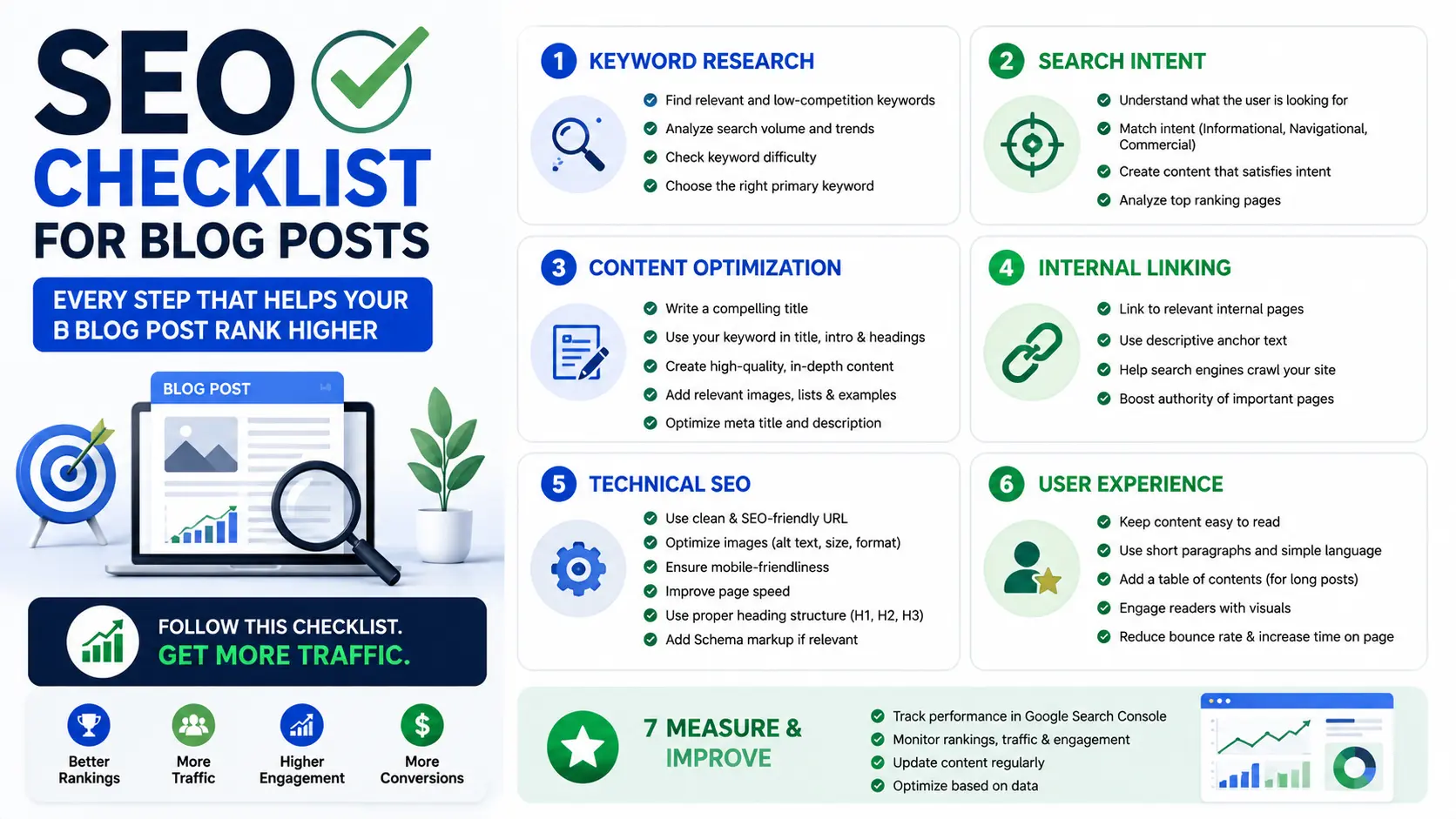
Understanding the SEO Checklist for Blog Posts
An SEO checklist isn’t just a list of tasks—it’s a system that ensures your content deserves to rank.
Back in the day, you could optimize a few keywords and call it done. Not anymore.
Today, Google is evaluating:
- Depth of understanding
- Content usefulness
- Experience signals (E-E-A-T)
- User behavior after clicking
That’s why a proper checklist isn’t optional—it’s your safety net.
In simple terms:
It’s the difference between “published content” and “rankable content.”
Why Most People Struggle With Blog SEO
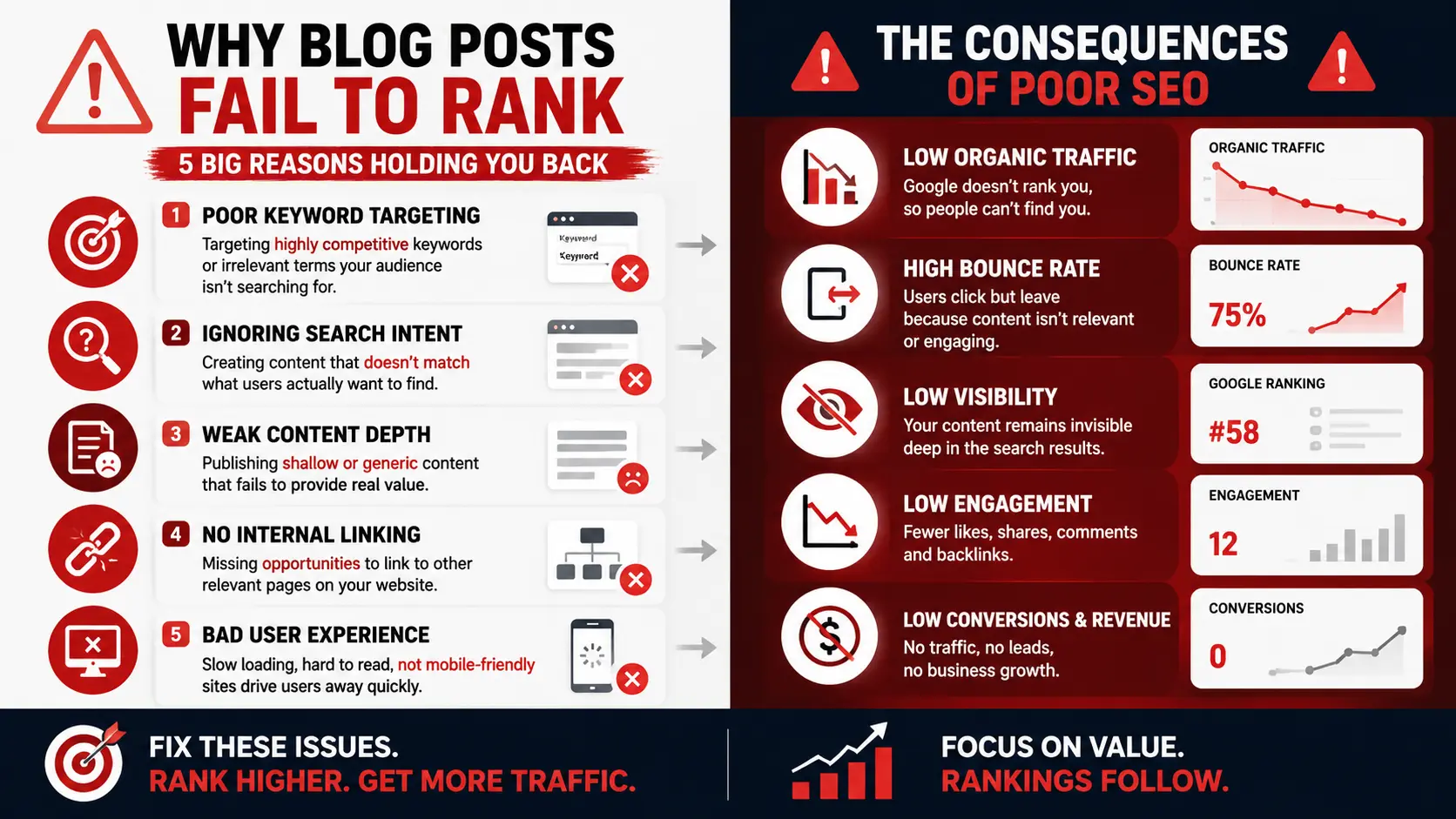
Here’s what I’ve seen repeatedly:
People think SEO is about adding things.
In reality, it’s about aligning things.
A few real scenarios:
- You target a keyword… but mismatch search intent
- You write great content… but ignore internal linking
- You optimize SEO… but forget user experience
And then you wonder why a worse article outranks you.
It’s frustrating—but fixable.
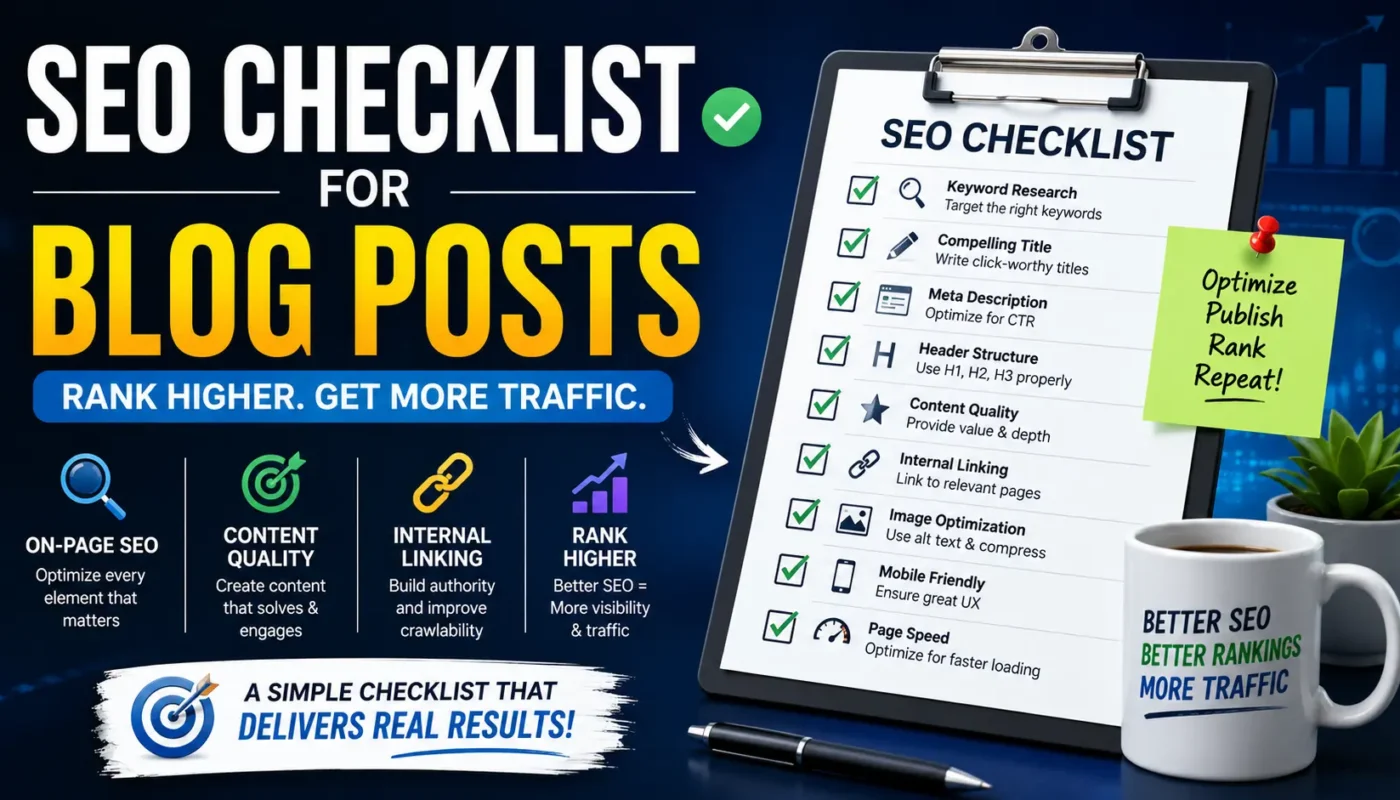
The SEO Checklist That Actually Moves Rankings
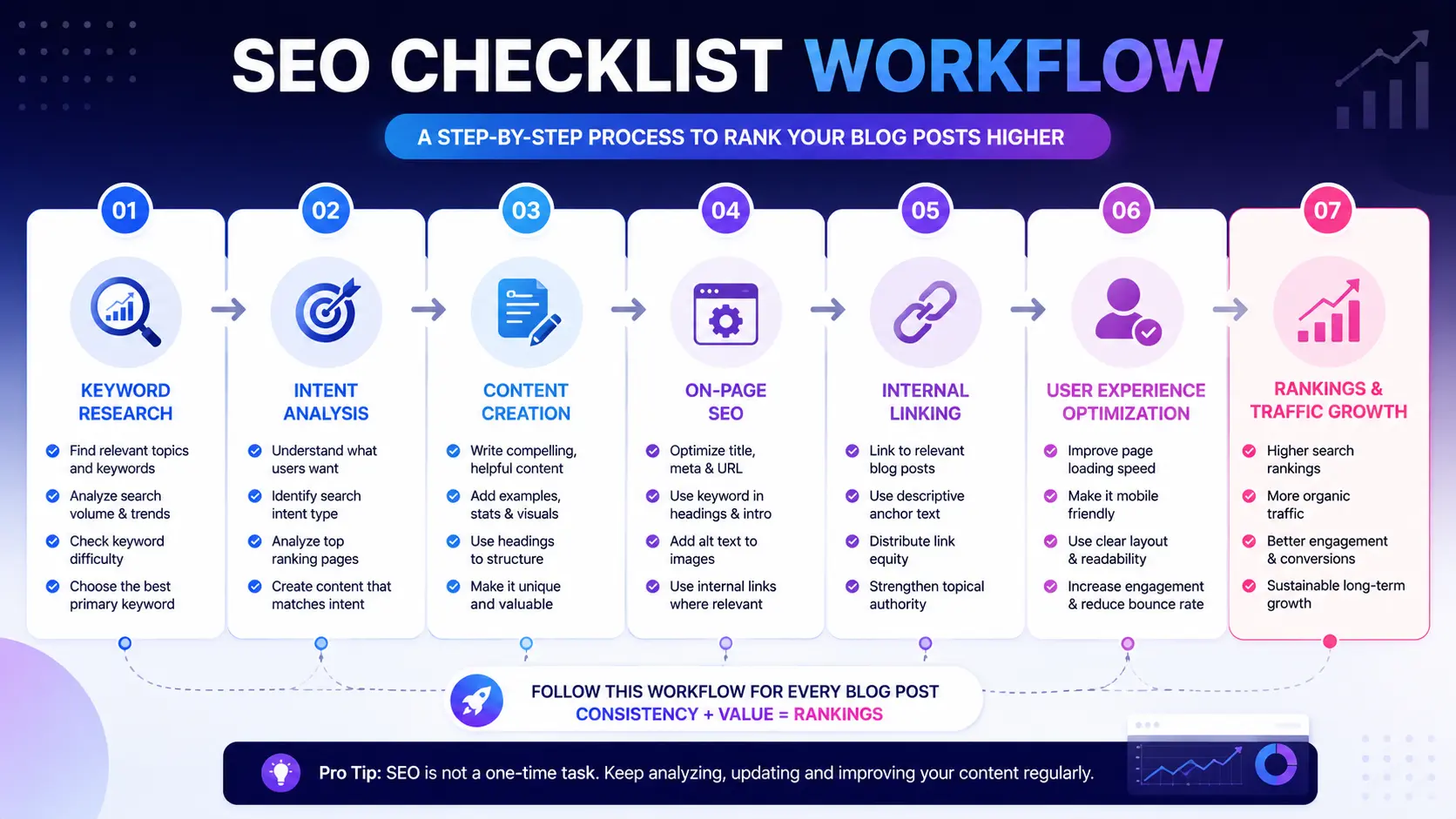
This isn’t a generic list. This is what I personally follow before and after publishing.
1. Keyword Intent Match (Non-Negotiable)
Before writing anything, ask:
“What does the searcher actually want?”
- Informational → Guides, tutorials
- Commercial → Comparisons, reviews
- Navigational → Brand pages
Reality check:
If your format doesn’t match intent, you won’t rank—no matter how good your content is.
2. SERP Reality Check
Don’t trust tools blindly.
Search your keyword manually and look at:
- Are top results blogs, videos, or product pages?
- Are Reddit/Quora ranking? (Opportunity signal)
- Is content outdated or generic?
Pro insight:
Weak SERPs = your fastest ranking opportunity.
3. Title That Earns the Click
Most people optimize for keywords.
Top pages optimize for clicks.
Your title should:
- Trigger curiosity
- Promise a clear outcome
- Stand out in the SERP
Bad: “SEO Checklist for Blog Posts”
Better: “SEO Checklist for Blog Posts (That Actually Rank in 2026)”
4. First 100 Words = Make or Break
If users bounce early, rankings drop. Simple.
Hook them with:
- A relatable problem
- A bold statement
- A hint of solution
This is where most blogs fail quietly.
5. Content Depth (Not Word Count)
Stop chasing 2,000+ words blindly.
Instead, ask:
- Did I fully solve the query?
- Did I add something new?
- Would I bookmark this?
What I’ve noticed:
Google rewards completeness, not length.
6. Internal Linking Strategy
This is massively underrated.
Link your content based on context, not randomly.
For example:
If you’re fixing SEO issues, you can naturally explore deeper strategies like SEO Mistakes to Avoid in 2026 (Costly Errors Killing Your Rankings).
If you’re trying to scale traffic without authority, check How to Grow Organic Traffic Without Backlinks (Proven SEO Strategy That Still Works).
And for keyword strategy, this concept is crucial:
The “Low-Hanging Fruit” Fallacy: How to Actually Find Low Competition Keywords in 2026
Why it matters:
- Improves crawlability
- Builds topical authority
- Keeps users engaged longer
7. On-Page SEO Essentials
You don’t need to overcomplicate this.
Just make sure:
- Keyword appears naturally in H1, H2, intro
- URL is clean and short
- Meta title is click-focused
- Images have descriptive alt text
That’s 80% of on-page SEO done right.
8. Content Formatting for Humans
People don’t read. They scan.
Make your content easy to consume:
- Short paragraphs
- Clear subheadings
- Occasional bullet points
- Visual breaks
Small tweak, big impact.
9. Add Original Insight (Your Edge)
This is where most blogs lose.
AI can summarize—but it can’t:
- Share real experience
- Add nuanced opinions
- Challenge common advice
Even one original insight can outperform 10 generic articles.
10. Optimize for “After Click” Experience
Ranking is step one. Staying ranked is step two.
Check:
- Page speed
- Mobile usability
- Visual clarity
If users bounce → Google notices.
Best Tools to Support Your SEO Checklist
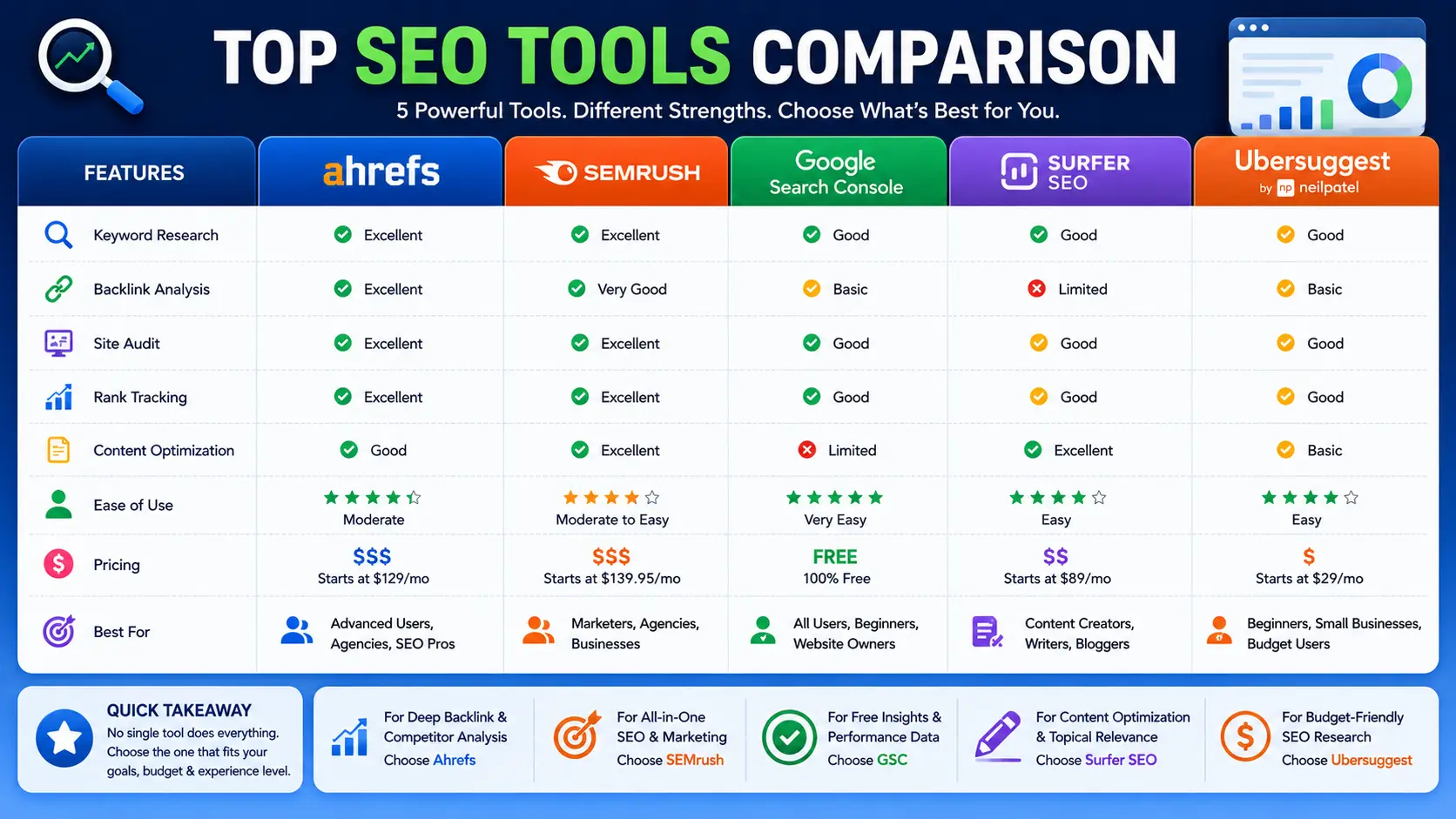
These tools don’t replace strategy—but they make execution faster.
1. Google Search Console
- Shows real keyword data
- Finds “almost ranking” pages
Best for: Content optimization
Insight: Your easiest wins are already in your data
2. Ahrefs
- Keyword research
- Competitor analysis
Best for: Scaling SEO strategy
Limitation: Expensive for beginners
3. SEMrush
- All-in-one SEO suite
- Site audits + keyword tracking
Best for: Agencies & advanced users
Pro tip: Use it for competitor gaps, not just keywords
4. Surfer SEO
- Content optimization
- NLP-based suggestions
Best for: On-page SEO
Reality: Don’t follow it blindly—use judgment
5. Google Trends
- Finds rising topics
Best for: Early opportunities
Hidden advantage: Low competition before tools catch up
6. AnswerThePublic
- Question-based keyword ideas
Best for: Long-tail content
Insight: Great for building topical clusters
7. Screaming Frog
- Technical SEO audits
Best for: Fixing site issues
Use case: Broken links, crawl errors
8. Ubersuggest
- Budget-friendly keyword tool
Best for: Beginners
Limitation: Data isn’t always precise
Honest Comparison (What Most Blogs Don’t Tell You)
Here’s the truth:
- Beginners: Ubersuggest + Google Search Console is enough
- Intermediate: Add Ahrefs or SEMrush
- Advanced: Combine tools + manual SERP analysis
What most blogs ignore:
Tools don’t find opportunities—interpretation does
How to Choose the Right Setup
If you’re starting out:
→ Use free tools + manual research
If you’re growing:
→ Invest in one premium tool
If you’re scaling:
→ Focus on systems, not tools
Common Mistakes That Kill Rankings
Mistake 1: Blindly Following SEO Tools
Tools suggest. They don’t decide.
Consequence: You create “average” content
Fix: Always validate with SERP analysis
Mistake 2: Ignoring Search Intent
This is the #1 ranking killer.
Consequence: You’ll never break page 2
Fix: Match format, not just keywords
Mistake 3: Publishing Without Strategy
Random blogs = random results.
Consequence: No topical authority
Fix: Build content clusters
Expert Insights (What Actually Works in 2026)
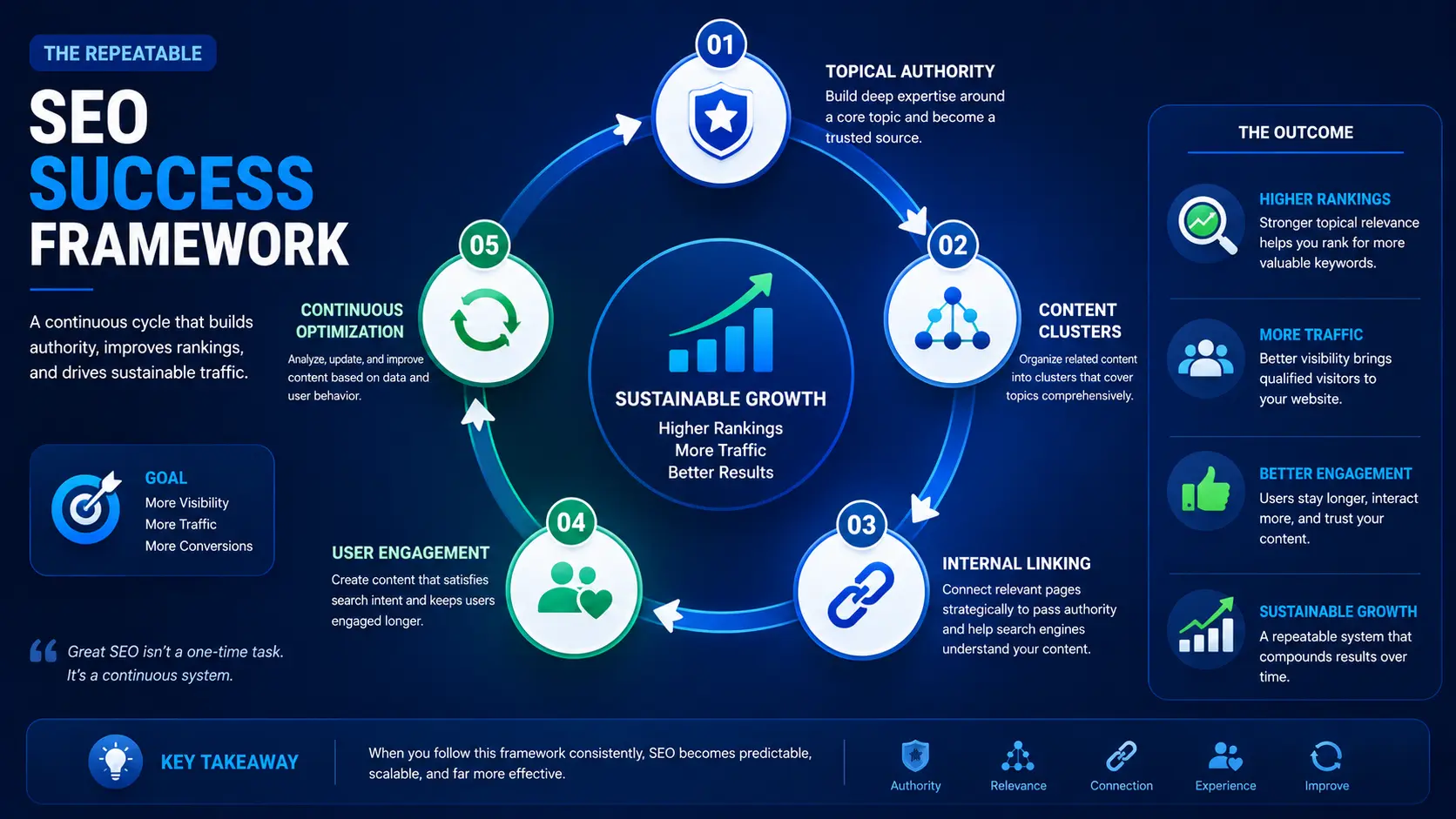
Here’s what I’ve seen working consistently:
- Topical authority beats backlinks (in many niches)
- Updating content is faster than creating new posts
- Internal linking is an unfair advantage most ignore
Also—speed matters.
The faster you identify opportunities, the faster you rank. That’s why having systems (not just tools) gives you an edge.
Conclusion
Most blogs don’t fail because of bad writing.
They fail because of missing strategy.
If you follow this checklist, you’re not just publishing—you’re competing.
And that’s the difference between page 5… and page 1.