 by
by Introduction
If your content isn’t ranking—even after “doing everything right”—you’re not alone.
Most SEO failures don’t come from lack of effort. They come from small, overlooked mistakes that quietly kill your growth.
I’ve seen sites stuck for months, then jump in rankings just by fixing a few of these. Let’s break down what’s actually going wrong—and how to fix it.
Understanding SEO Mistakes (Why They Matter More Than Ever)
SEO mistakes aren’t always obvious. In fact, the dangerous ones are usually subtle.
It’s not just about keywords anymore. Search engines now care about:
- Intent alignment
- Content depth
- User behavior
- Site experience
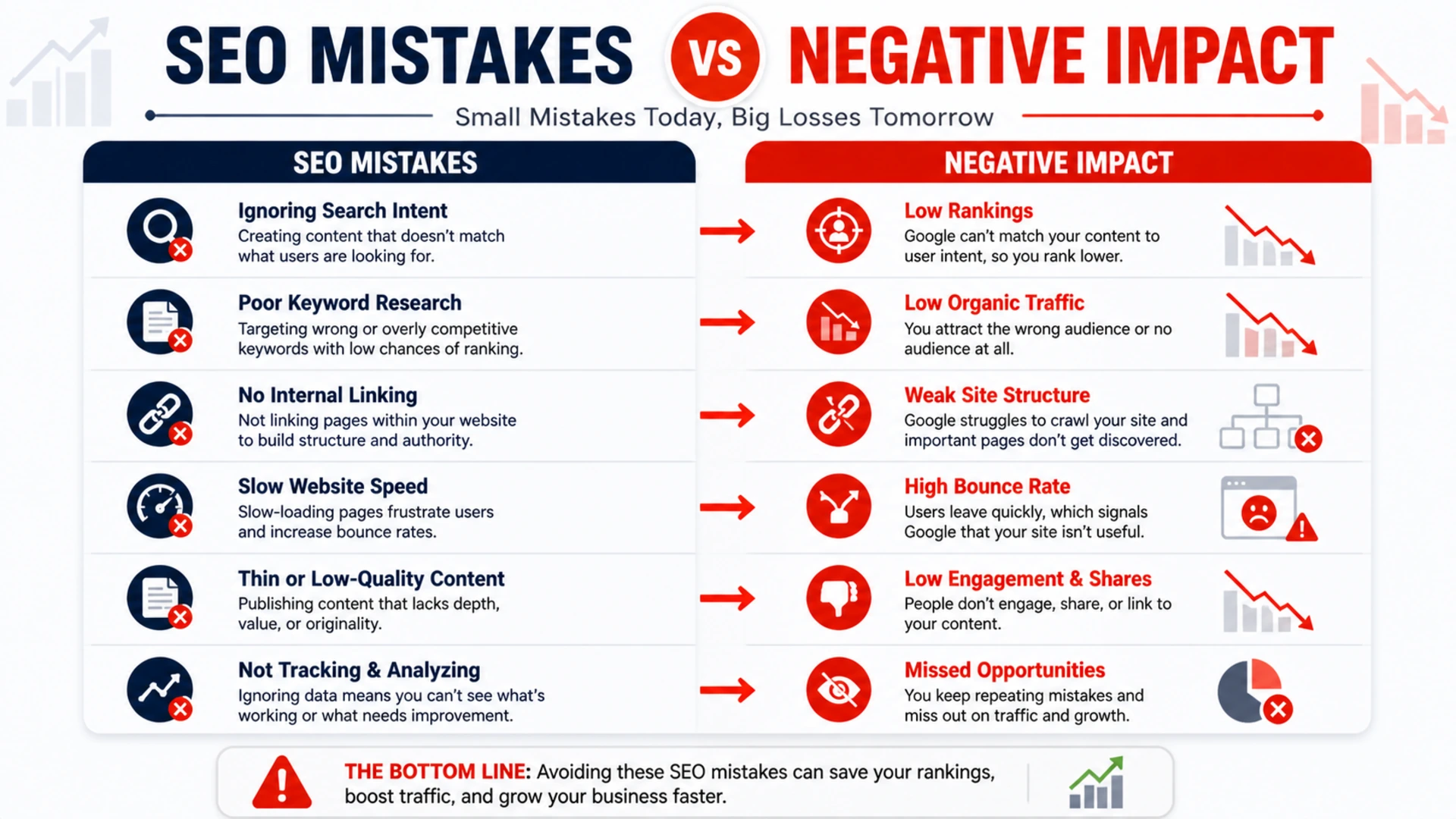
That means one wrong move—like targeting the wrong keyword or ignoring structure—can hold your entire site back.
Why Most People Struggle With SEO
You’re Following Outdated Advice
A lot of SEO content online is stuck in 2018. Keyword stuffing, exact match obsession, and “just write long content” don’t work like they used to.
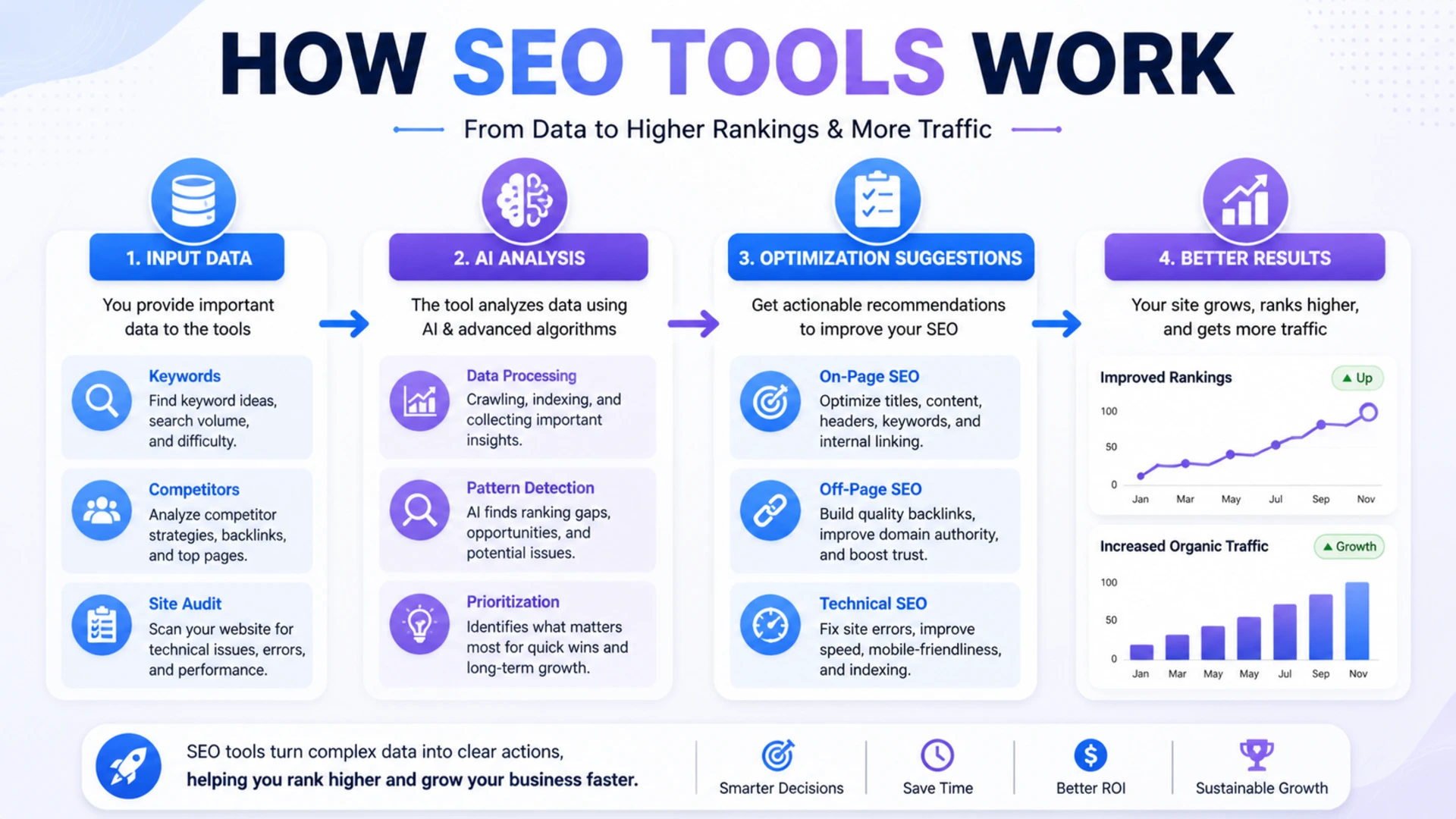
You Focus on Tools Instead of Strategy
Tools are helpful—but they don’t replace thinking. I’ve seen people spend hours in dashboards and still miss the basics.
You Don’t Understand Search Intent
This is the biggest one. If your content doesn’t match what users actually want, it won’t rank—no matter how optimized it looks.
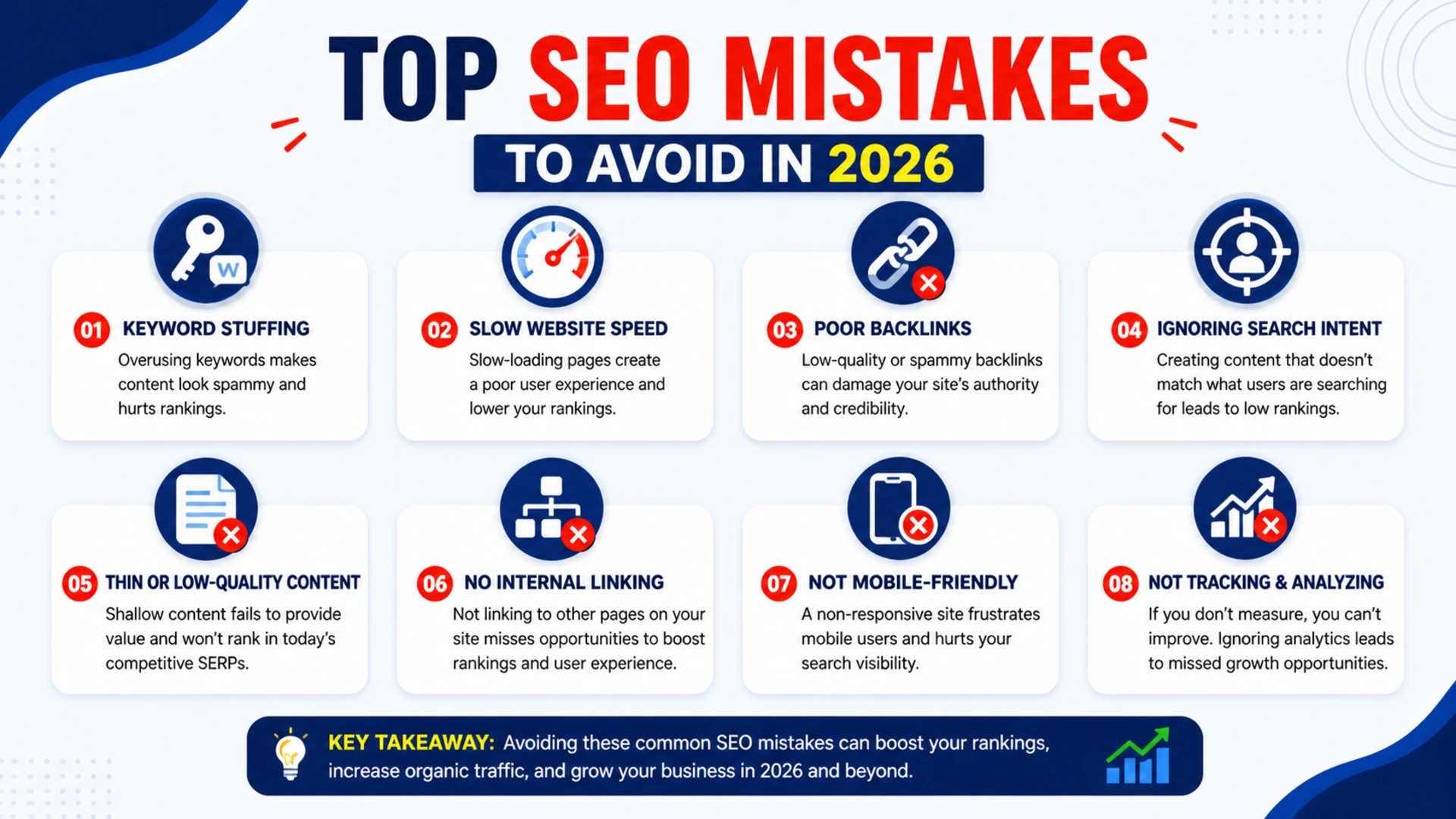
SEO Mistakes to Avoid (What Actually Holds You Back)
Targeting Keywords Without Understanding Intent
You pick a keyword, write content, and expect results.
But if Google is ranking product pages and you wrote a blog post, you’re already out of the game.
Fix:
Search your keyword first. Study what’s ranking. Match the format.
Writing Content Without Depth
Thin content doesn’t compete anymore.
I’ve seen 3,000-word posts lose to shorter ones simply because they were more focused and useful.
Fix:
Answer the full problem—not just parts of it.
Ignoring Internal Linking
This is one of the most underrated ranking factors.
Most people publish content and move on. No connections, no structure.
Fix:
Link your content strategically.
For example, if you’re working on local SEO, this guide on
Best Local SEO Tools for Small Businesses (2026 Guide to Rank Faster Locally)
can support your overall strategy.
Over-Optimizing Content
Stuffing keywords, forcing headings, repeating phrases—it makes content unnatural.
And Google notices.
Fix:
Write naturally. Optimize lightly.
Skipping Technical SEO Basics
Broken links, slow pages, indexing issues—these silently kill rankings.
Most beginners ignore this because it feels “too technical.”
Fix:
Run basic audits regularly.
Chasing High Competition Keywords Too Early
This is a common trap.
You go after big keywords, but your site doesn’t have the authority yet.
Fix:
Start with low-competition keywords. Build up gradually.
Not Updating Old Content
SEO isn’t “publish and forget.”
I’ve seen old posts jump to page 1 just by updating them.
Fix:
Refresh content every few months:
- Add new data
- Improve structure
- Fix outdated info
Ignoring User Experience Signals
High bounce rate, low time on page—these matter more than most people think.
If users don’t engage, rankings drop.
Fix:
Make content easy to read:
- Short paragraphs
- Clear structure
- Useful insights
Relying Too Much on Tools
Tools can guide you—but they can also mislead you.
Blindly following keyword difficulty scores is a mistake.
Fix:
Use tools as support, not decision-makers.
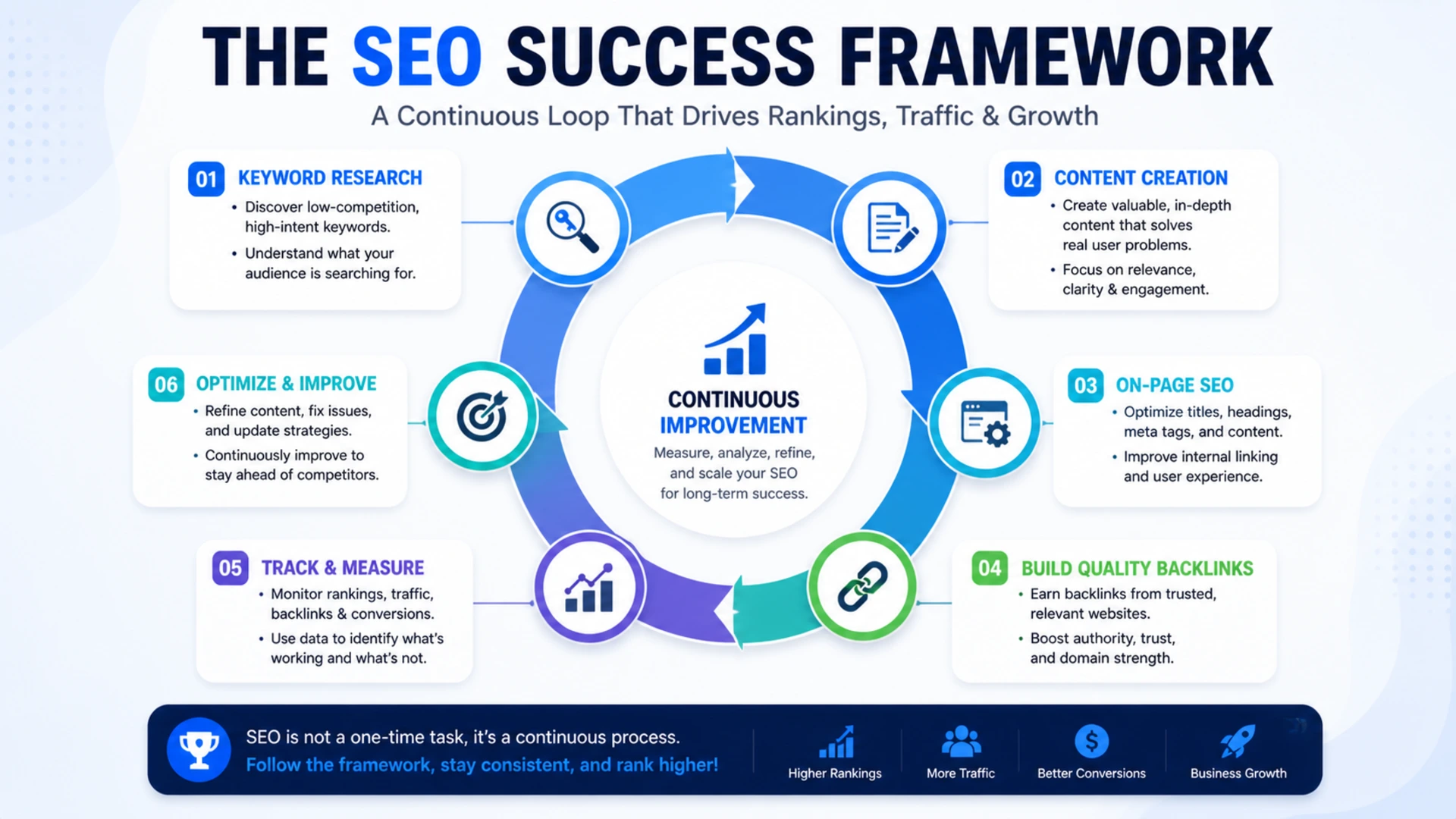
No Clear SEO Strategy
This is the biggest one.
Random blog posts don’t build rankings. Systems do.
If you’re serious about scaling, reporting and tracking become critical. This guide on
SEO Reporting Tools for Agencies (2026 Guide to Save Time & Impress Clients)
explains how to track performance properly.
Honest Insight Most Blogs Won’t Tell You
There is no “perfect SEO setup.”
Some sites rank with poor backlinks. Others rank with minimal content.
Why?
Because they align better with intent + clarity + structure.
That’s the real game.
How to Avoid These Mistakes (Simple Framework)
If You’re Just Starting
Focus on:
- Low competition keywords
- Clear content structure
- Consistency
If You’re Already Publishing
Improve:
- Internal linking
- Content depth
- Updates
If You Want to Scale
Start focusing on:
- Topic clusters
- Data-driven decisions
- Reporting systems
This is where tools from
Best SEO Reporting Tools for Agencies in 2026: Save Time, Impress Clients, Scale Faster
become useful.
Common Patterns I’ve Seen (Real Insight)
Most struggling sites:
- Target wrong keywords
- Publish without structure
- Ignore internal linking
Most growing sites:
- Focus on intent
- Build content clusters
- Improve existing content
That difference is everything.
Expert Insights (What Actually Moves Rankings)
Content Clarity Beats Content Length
Don’t try to impress—try to help.
Updating Content Is Faster Than Writing New
This is one of the highest ROI moves in SEO.
Internal Linking Is a Hidden Ranking Boost
If your pages don’t connect, Google can’t understand your site.
SEO Is a System, Not a Trick
If you don’t have a structure, growth will always be slow.
Conclusion
SEO mistakes are rarely dramatic—but they’re expensive.
Fixing even a few of these can unlock growth faster than publishing more content.
Focus on clarity, intent, and structure. Everything else becomes easier from there.