 by
by Introduction
A lot of website owners quietly believe the same thing:
“If I don’t have backlinks, I probably can’t rank.”
I used to think that too. And honestly, years ago, that was partially true. Strong backlinks could push average content to page one. But Google has changed a lot.
Today, I’ve seen small sites with almost no backlinks outrank bigger competitors simply because they understood search intent better, structured content smarter, and solved problems more clearly.
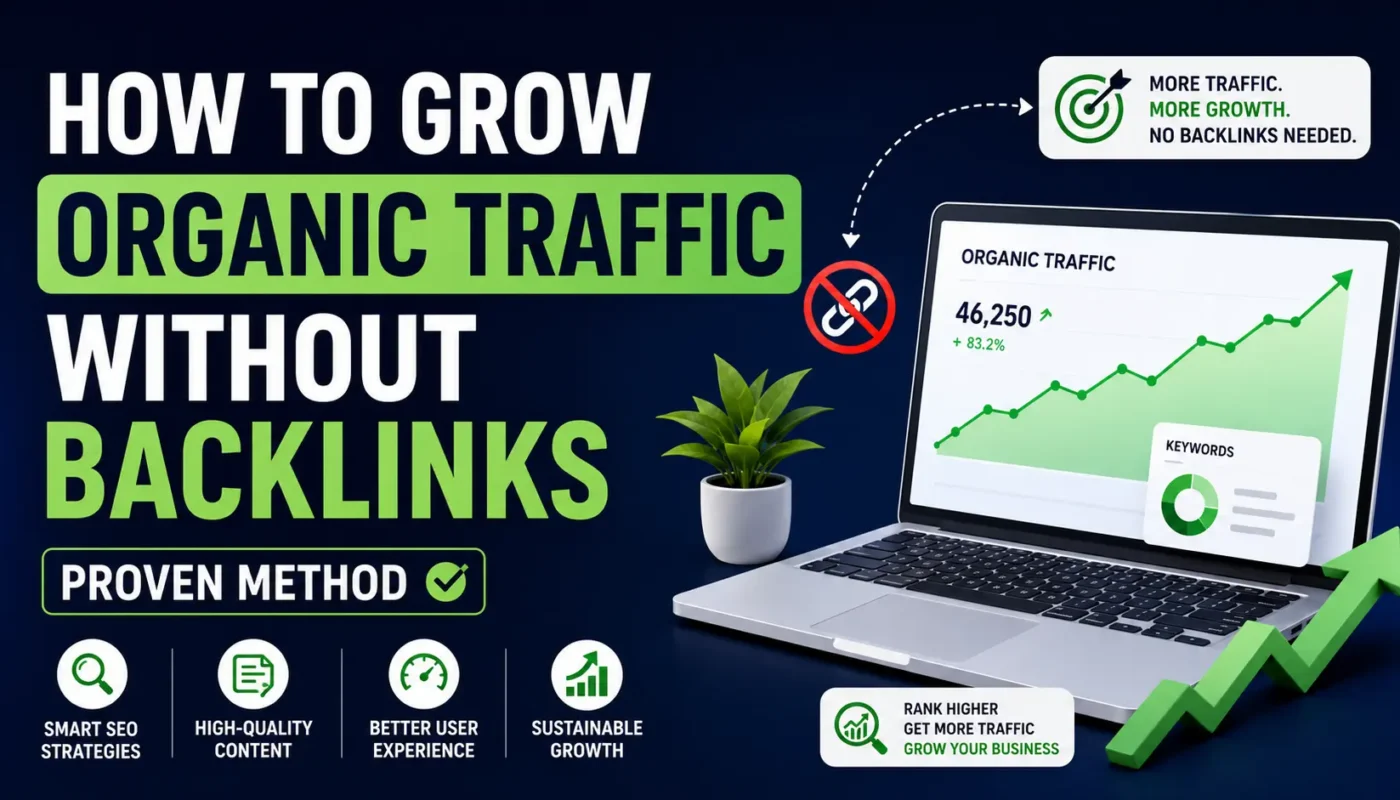
If your site is new, your domain is weak, or you simply don’t have the budget for link building, this guide will show you how to increase organic traffic without backlinks using strategies that are actually working right now.
Why SEO Without Backlinks Is More Possible Today
Google is far better at understanding quality than it used to be.
Years ago, rankings were heavily influenced by raw authority signals. Now, user satisfaction matters much more. That shift changed the game for smaller websites.
Search engines analyze:
- Search intent alignment
- Content depth
- Engagement signals
- User experience
- Topical authority
- Content freshness
- Behavioral patterns
This is why some low-authority websites suddenly explode in traffic.
They stop trying to “beat” giant sites with backlinks and instead become more useful than them.
That’s the real opportunity.
What Most People Get Wrong About Organic Traffic
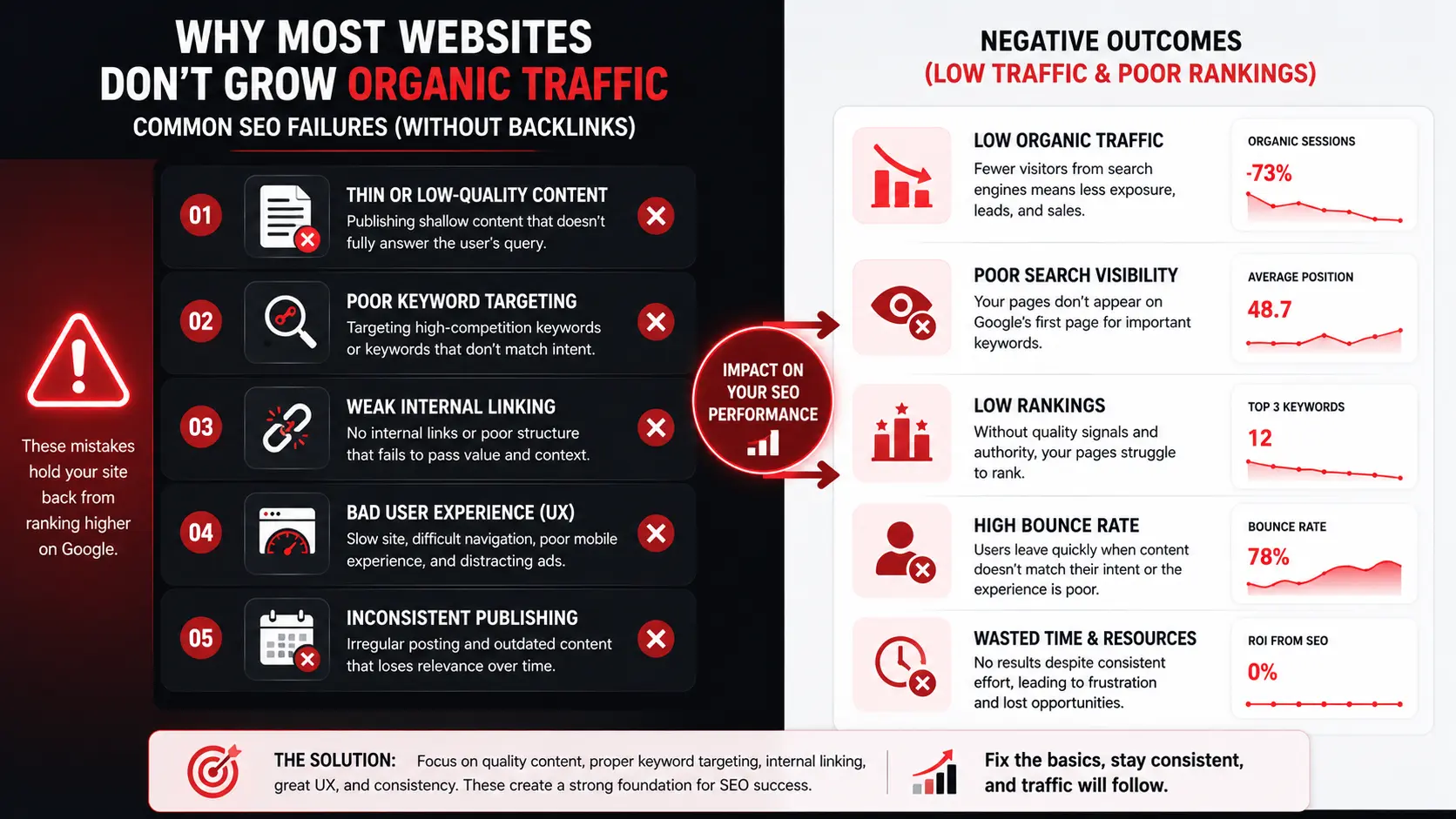
One of the biggest SEO myths is thinking backlinks are the starting point.
They’re not.
Most websites fail before backlinks even matter.
What I’ve seen repeatedly is this:
People publish random articles with weak targeting, poor structure, vague intent, and generic information. Then they wonder why traffic never grows.
Backlinks amplify quality.
They rarely fix weak SEO foundations.
If your content doesn’t deserve rankings, links usually won’t save it long-term anyway.
The Real Reason Some No-Backlink Sites Grow Fast
There’s a pattern I’ve noticed among smaller websites that suddenly gain traction.
They usually focus on:
- Low-competition search intent
- Topic clusters instead of isolated posts
- Fresh content opportunities
- Better readability
- Clearer answers than competitors
- Faster user satisfaction
In simple terms:
They make Google’s job easier.
That matters more than most people realize.
Proven Ways to Increase Organic Traffic Without Backlinks
Focus on Low-Competition Keywords First
This is probably the biggest leverage point for newer sites.
Trying to rank for broad terms like “SEO tools” is usually a waste of time early on. You’ll compete against massive authority domains.
Instead, target:
- Long-tail keywords
- Problem-focused searches
- Comparison terms
- Beginner questions
- Emerging trends
For example:
Instead of targeting:
“SEO reporting tools”
You could target:
- “best SEO reporting tools for freelancers”
- “SEO reporting dashboard for small clients”
- “simple SEO reporting tools for beginners”
The search volume may look smaller individually, but collectively these keywords compound traffic surprisingly fast.
And they’re much easier to rank without backlinks.
Build Topic Clusters Instead of Random Articles
One high-performing article rarely builds authority alone anymore.
Google wants topical depth.
This is why content clusters work extremely well.
Instead of publishing disconnected posts, create multiple related articles around one broader topic.
For example:
If your main topic is SEO reporting, supporting articles could include:
- SEO reporting templates
- Automated reporting tools
- White-label SEO reports
- SEO KPIs beginners should track
- Client reporting mistakes agencies make
This creates semantic relevance across your website.
Google starts recognizing your site as useful for that topic category.
That’s a huge ranking advantage.
If you want examples of content clustering around reporting workflows, check this guide on “SEO Reporting Tools for Agencies (2026 Guide to Save Time & Impress Clients)” and compare how related subtopics reinforce topical authority naturally.
Match Search Intent Better Than Competitors
This is where many blogs completely fail.
They target the right keyword but create the wrong type of content.
For example:
Someone searching:
“seo without backlinks”
doesn’t want a theoretical explanation about PageRank history.
They want practical methods that work even with a weak domain.
Google tracks satisfaction signals.
If users bounce back quickly, rankings weaken over time.
Before writing content, study:
- What format ranks
- What questions competitors ignore
- What users actually need solved
Sometimes ranking improvements come from clarity, not complexity.
Improve Content Depth Without Adding Fluff
A common mistake newer bloggers make is trying to hit arbitrary word counts.
Longer does not automatically mean better.
Google increasingly rewards:
- Specificity
- Clarity
- Practical usefulness
- Real examples
- Actionable structure
I’ve seen 1,500-word articles outrank 5,000-word “ultimate guides” simply because they solved the problem faster.
Depth means:
Explaining the “why” behind tactics.
Not stretching paragraphs endlessly.
Use Strategic Internal Linking
Internal linking is massively underrated for smaller sites.
It helps:
- Spread authority across pages
- Improve crawlability
- Increase dwell time
- Build topical relevance
More importantly, it helps Google understand relationships between topics.
For example, if someone is learning SEO fundamentals, naturally linking to “SEO Mistakes to Avoid in 2026 (Costly Errors Killing Your Rankings)” creates contextual reinforcement.
That matters more than random sidebar links.
A good internal link should genuinely help the reader continue solving their problem.
Optimize for Fast Wins With Content Refreshes
One thing many bloggers ignore:
Older posts can often grow faster than new ones.
Instead of constantly publishing new content, update articles that already have impressions in Google Search Console.
Look for pages:
- Ranking between positions 10–30
- Getting impressions but low clicks
- Losing traffic gradually
Then improve:
- Titles
- Search intent alignment
- Introduction clarity
- Content freshness
- Missing sections
- Internal links
Sometimes small updates create surprisingly large jumps.
Improve Click-Through Rate Before Chasing More Traffic
A page ranking #7 with a strong CTR can outperform a page ranking #4 with a weak CTR.
That’s why titles matter so much.
Good SEO titles create curiosity without becoming clickbait.
For example:
Weak title:
“SEO Tips for Beginners”
Stronger title:
“How I Increased Organic Traffic Without Backlinks (What Actually Worked)”
The second feels specific and experience-driven.
People click clarity.
Focus Heavily on User Experience
Google increasingly measures how users interact with websites.
This includes:
- Mobile usability
- Page speed
- Readability
- Layout clarity
- Ad aggressiveness
- Content accessibility
A slow, cluttered website silently kills rankings over time.
Especially for newer domains.
Simple formatting improvements alone can reduce bounce rates significantly.
Short paragraphs help more than most people think.
Publish Consistently Around One Core Topic
Many new sites fail because they chase every trending keyword possible.
One week SEO.
Next week AI avatars.
Then crypto.
Then email marketing.
That confuses topical signals.
What works better is narrowing focus initially.
Become genuinely useful in one category before expanding.
Google trusts specialization faster than randomness.
Use SEO Tools Strategically (Without Overcomplicating Things)
You do not need expensive enterprise tools early on.
What matters is using data intelligently.
Useful tools for growing organic traffic without backlinks include:
Google Search Console
Best for:
- Finding impression opportunities
- CTR optimization
- Content refresh ideas
Hidden insight:
Most beginners ignore queries ranking between positions 8–20. Those are usually your fastest growth opportunities.
LowFruits
Best for finding low-competition keywords.
It’s especially useful for newer websites targeting weaker SERPs.
Surfer SEO
Helpful for content optimization and intent matching.
But honestly, don’t obsess over optimization scores. Many people over-optimize content into sounding robotic.
Use it as guidance, not law.
Semrush
Still one of the best all-around SEO research platforms.
Especially useful for:
- Keyword gaps
- Topic research
- Competitor analysis
If you’re comparing advanced reporting workflows, this guide on “Best SEO Reporting Tools for Agencies in 2026: Save Time, Impress Clients, Scale Faster” breaks down how agencies actually use SEO data strategically.
Honest Truth: Backlinks Still Matter Eventually
I don’t want to oversell the “no backlinks” angle.
Backlinks still matter.
Especially in highly competitive niches.
But here’s the important distinction:
You do not need backlinks to start growing.
You need them later to scale aggressively.
That changes the entire mindset.
The goal early on is proving relevance and usefulness first.
Once content quality and topical authority improve, backlinks become much easier to earn naturally anyway.
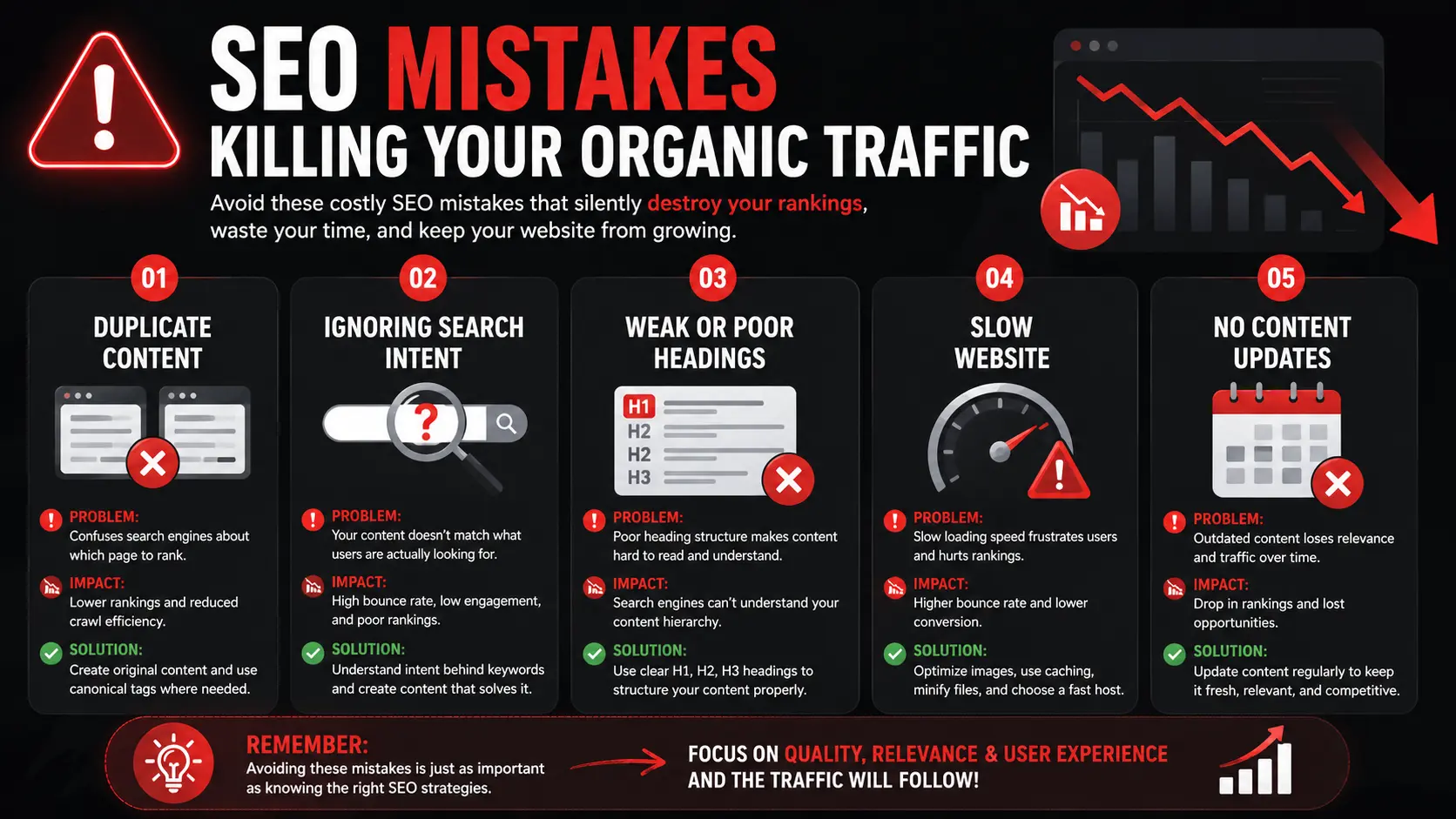
Common Mistakes That Kill Organic Traffic Growth
Publishing AI-Generated Fluff
This is becoming incredibly common.
Generic AI content often lacks:
- Experience
- Specificity
- Original insight
- Clear positioning
Google is getting better at detecting shallow usefulness.
Human editing matters.
A lot.
Chasing Search Volume Instead of Opportunity
Large keywords look attractive.
But newer sites usually grow faster targeting easier intent-driven searches.
Small wins compound.
That’s how authority builds.
Ignoring Search Console Data
This is one of the most painful mistakes I see.
Google literally tells you where opportunities exist.
Most site owners never analyze the data properly.
Overcomplicating SEO
Honestly, many SEO problems are simpler than people think.
Better clarity.
Better intent matching.
Better structure.
Better user experience.
Those fundamentals outperform “advanced hacks” surprisingly often.
Expert Insights Most SEO Blogs Don’t Talk About
Here’s something I’ve personally observed repeatedly:
Google often rewards the clearest answer, not necessarily the most “optimized” one.
That changes how you should write.
Instead of trying to sound impressive:
Try sounding genuinely helpful.
Another overlooked point:
Topical consistency matters more than publishing frequency.
A site publishing two highly relevant posts weekly can outperform a site publishing daily random content.
And finally:
Content momentum is real.
Once Google begins trusting your topic relevance, rankings become noticeably easier over time.
That’s why consistency matters so much during the first 6–12 months.
Final Thoughts
Growing organic traffic without backlinks is absolutely possible.
But it requires a smarter strategy.
You need:
- Better search intent targeting
- Stronger topical relevance
- Helpful content
- Clearer user experience
- Consistent optimization
Most importantly, stop treating backlinks as the starting line.
They’re an amplifier.
Not the foundation.
If you focus first on becoming genuinely useful within a focused topic area, rankings can come much faster than most people expect.
Especially today.