 by
by Introduction
If you’ve got some good stuff on your blog but you’re still stuck on page 2 or 3… you’re not alone.
I’ve seen this over and over and over again. Decent articles, decent keyword targeting, but no real structure. Google no longer simply ranks pages. It ranks knowledge of a subject.
This is where topical clusters come into play. And if they’re done well, they don’t just improve rankings, they compound traffic.
Let me walk you through how this actually works in practice.
Understanding Topical Clusters SEO (Without the Fluff)
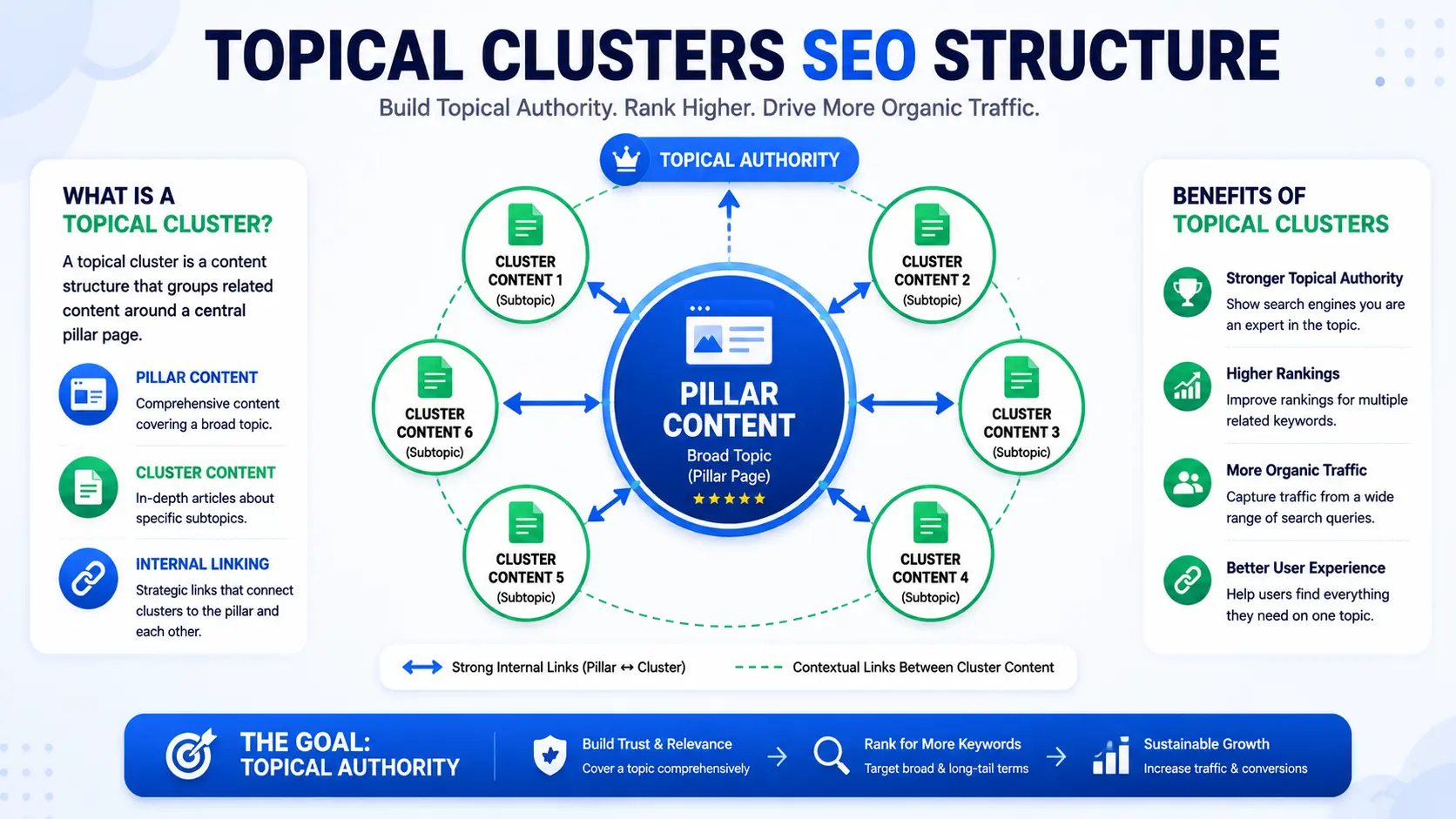
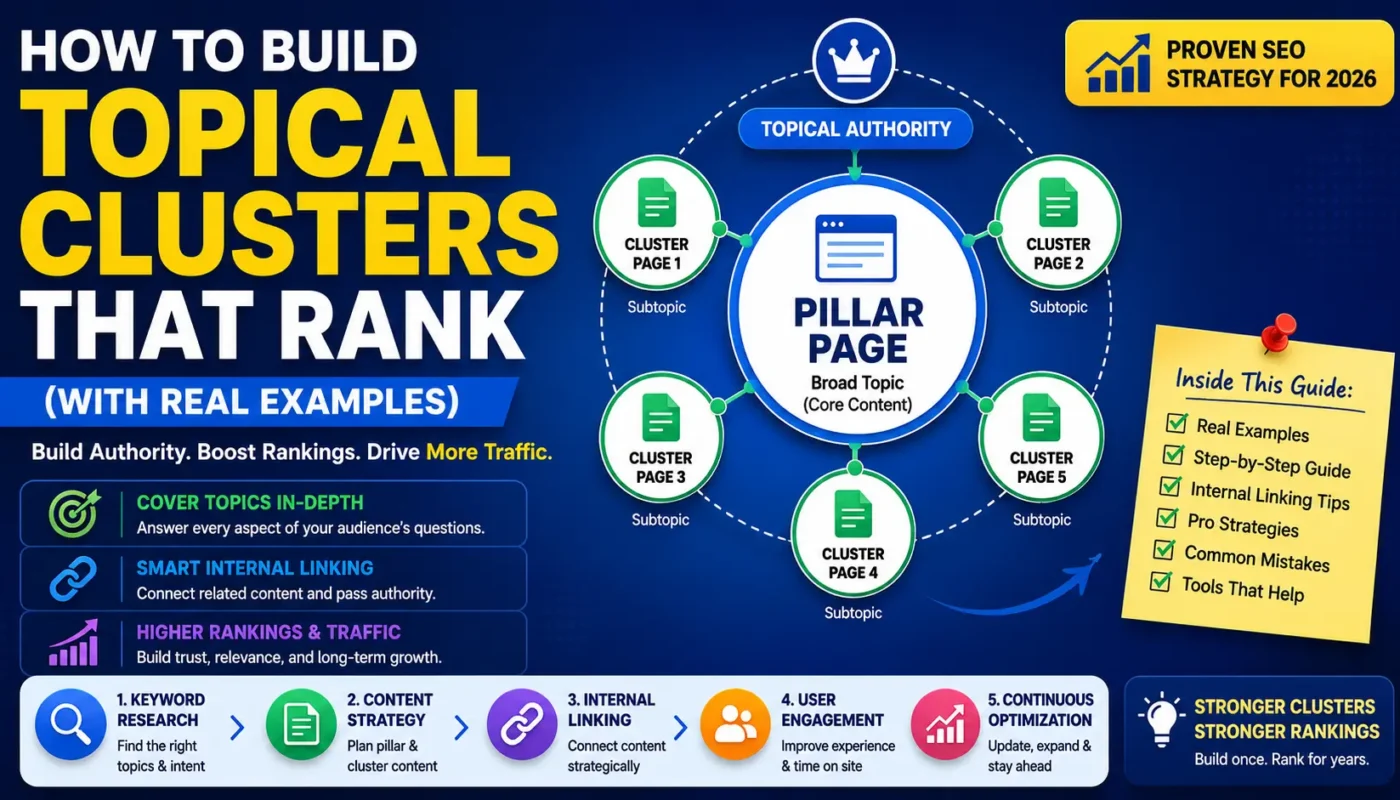
Topical clusters are basically a structured way of organizing content so search engines see you as an authority—not just another blog publishing random posts.
Instead of writing isolated articles, you build:
- One pillar page (broad topic)
- Multiple cluster pages (specific subtopics)
- Strategic internal links connecting everything
Simple in theory. But execution is where most people fail.
Why this matters more in 2026
Search has changed.
- AI content is everywhere
- Generic content is losing traction
- Google prioritizes topical depth + context
In my experience, a well-built cluster can outrank higher DR sites—even without backlinks—because it signals true topical authority.
Why Most People Struggle With Content Clusters
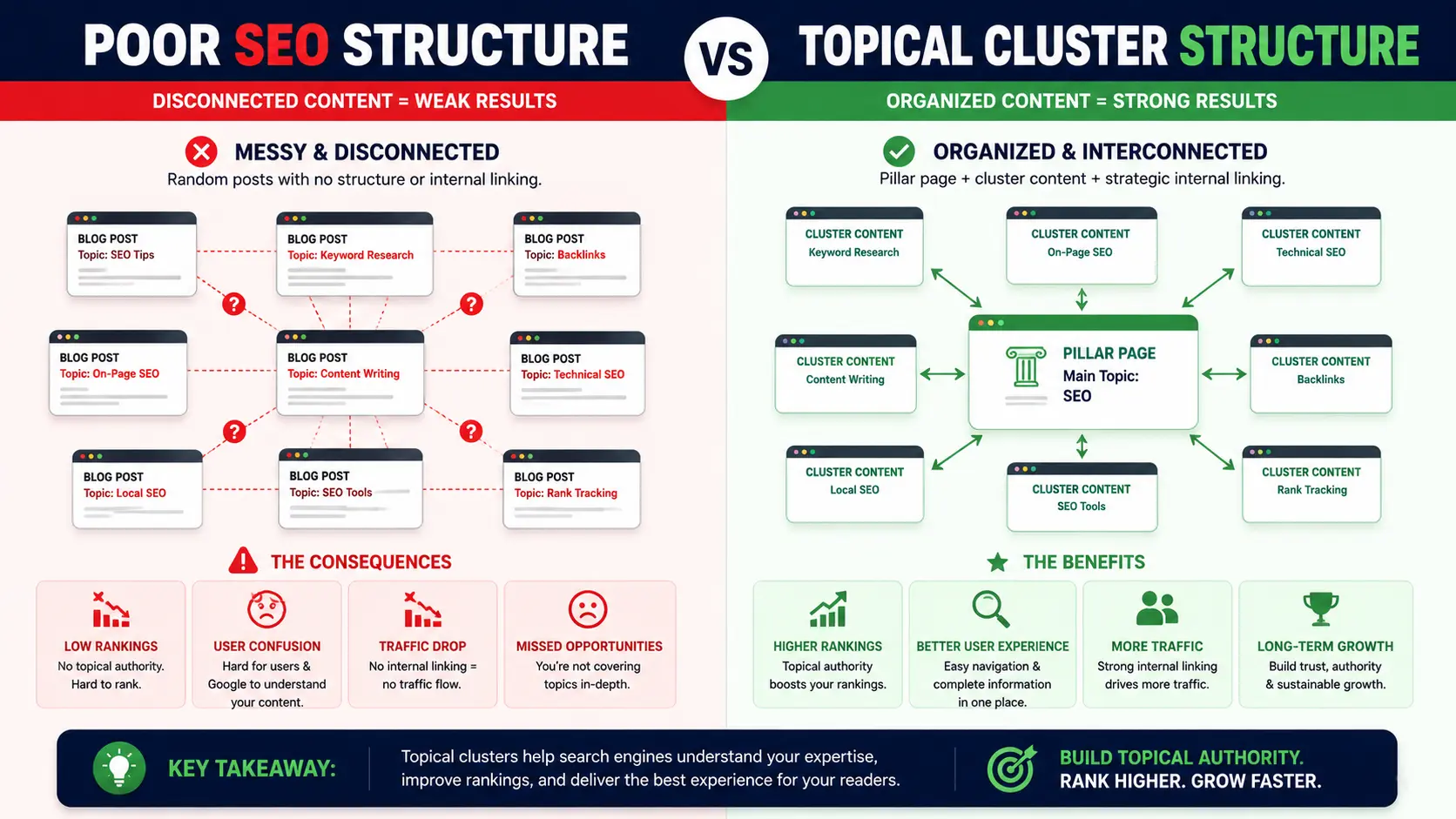
Here’s the honest truth: people overcomplicate it or do it halfway.
I’ve audited blogs where:
- They created a “pillar page”… but no internal linking
- They wrote clusters… but all targeting the same keyword
- They ignored search intent completely
The result? Confusion—for both users and Google.
Real scenario
Someone writes:
- “Best SEO Tools”
- “Top SEO Tools”
- “SEO Tools List”
Three articles… same intent… cannibalizing each other.
Instead of building authority, they dilute it.
If you’ve ever wondered why your rankings fluctuate, this is often the hidden reason.
Best Tools & Methods to Build Topical Clusters That Rank
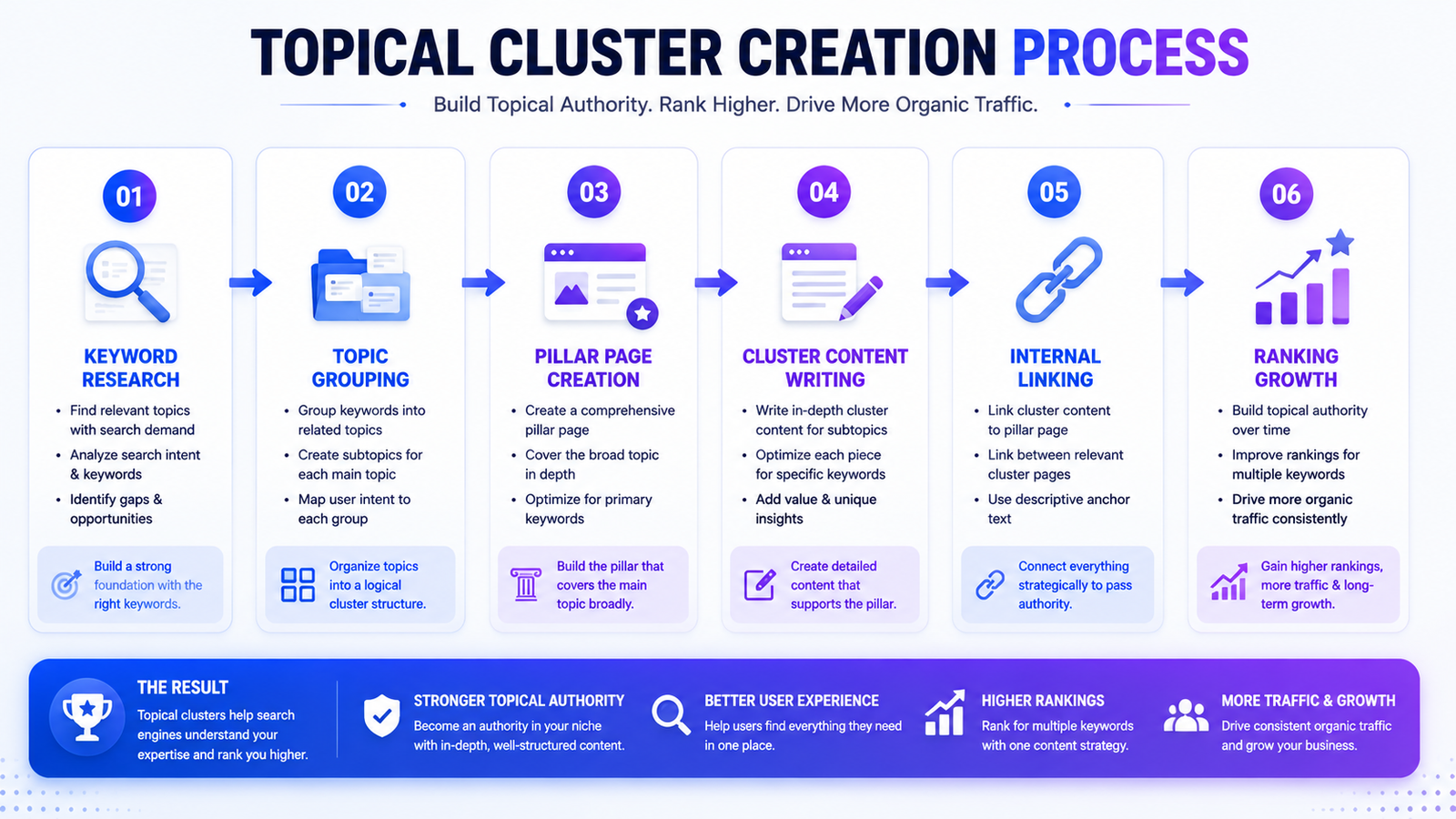
Let’s get practical. These are the tools and methods I’ve personally seen working—not theory.
1. Ahrefs (Keyword + Cluster Mapping)
What it does: Finds keyword variations and parent topics
Why it’s useful: Helps avoid keyword cannibalization
When to use: Cluster planning stage
Best for: Intermediate to advanced users
Insight:
Don’t just look at KD. Look at “Parent Topic”—that’s your cluster anchor.
2. SEMrush (Topic Research Tool)
What it does: Generates topic ideas in clusters
Why it’s useful: Visualizes content structure
When to use: Early brainstorming
Best for: Bloggers & agencies
Limitation:
It suggests ideas—but doesn’t tell you what to prioritize. You still need judgment.
3. Google Search Console (Hidden Cluster Goldmine)
What it does: Shows what you’re already ranking for
Why it’s useful: Finds cluster expansion opportunities
When to use: After publishing content
Best for: Everyone
Pro insight:
If you’re ranking #12 for multiple similar queries—you already have a cluster forming. Optimize it instead of writing new posts.
4. Surfer SEO (Content Structure Optimization)
What it does: Helps optimize content based on SERP data
Why it’s useful: Aligns clusters with ranking patterns
When to use: During content writing
Best for: Content-heavy sites
Reality check:
Don’t blindly follow scores. Use it as a guide, not a rulebook.
5. Notion / Trello (Cluster Planning System)
What it does: Organizes content ideas
Why it’s useful: Keeps cluster structure clear
When to use: Always
Best for: Beginners
Insight:
Most SEO failures are actually planning failures, not keyword issues.
6. AnswerThePublic (Intent-Based Clusters)
What it does: Finds question-based queries
Why it’s useful: Expands cluster depth
When to use: Topic expansion
Best for: Long-tail strategies
Hidden advantage:
These queries often have low competition but high engagement.
7. Google SERP Analysis (Manual but Powerful)
What it does: Shows real ranking patterns
Why it’s useful: Validates cluster ideas
When to use: Before writing
Best for: Serious SEOs
My take:
If Reddit threads rank → that’s a cluster opportunity.
8. Internal Linking Strategy (The Real Game Changer)
What it does: Connects your cluster
Why it’s useful: Passes authority across pages
When to use: After publishing
Best for: Everyone
Truth:
Clusters without internal linking = wasted effort.
Honest Comparison: What Actually Matters
Here’s something most blogs won’t say:
Tools don’t build clusters. Decisions do.
- If you’re a beginner → Use Google + Search Console
- If you’re scaling → Use Ahrefs/SEMrush for speed
- If you’re writing heavily → Use Surfer for consistency
The real trade-off:
- Tools give data
- Experience decides direction
And direction is what ranks.
How to Choose the Right Approach (Simple Framework)
If you’re confused, use this:
If you’re on a low budget
Stick to:
- Google Search
- Auto-suggest
- Search Console
That’s enough to build clusters.
If you’re a beginner
Focus on:
- One topic
- 5–10 cluster articles
- Strong internal linking
Don’t overexpand too early.
If you’re scaling a site
You need:
- Keyword mapping tools
- Content planning system
- Clear topical authority roadmap
This is where things compound.
Common Mistakes That Kill Cluster Rankings
Writing clusters without intent clarity
You end up targeting the same query repeatedly.
Fix: Map intent before writing.
Weak internal linking
Pages exist—but don’t support each other.
Consequence: No authority flow.
Over-relying on keyword tools
You follow metrics blindly.
Reality: SERP matters more than KD.
If you want to avoid deeper structural issues, check this guide on
SEO Mistakes to Avoid in 2026 (Costly Errors Killing Your Rankings)—it connects directly with cluster failures.
Expert Insights: What Actually Moves Rankings
Here’s what I’ve seen working consistently:
- Google rewards depth over volume
- 10 well-linked articles > 50 random posts
- Clusters work best when built fast, not scattered over months
One underrated strategy
Publish:
- Pillar page first
- Then 3–5 supporting articles within 7–10 days
This creates a momentum signal.
Also, if you’re struggling to gain traction without backlinks, this ties directly into
How to Grow Organic Traffic Without Backlinks (Proven SEO Strategy That Still Works)—clusters are a big part of that strategy.
And if you’re still unsure about structuring your content properly,
The Only SEO Checklist for Blog Posts You Actually Need in 2026 (Rank Faster, Smarter) will help you execute this step-by-step.
Conclusion
Topical clusters aren’t an SEO tactic anymore. They are the heart of modern rankings.
Stop thinking about “keywords.”
start thinking in terms of topics, intent and connections
Pick a topic, dive deep, tie everything together – and suddenly Google begins to trust your site.
That’s when traffic stops being random… and starts to compound.