 by
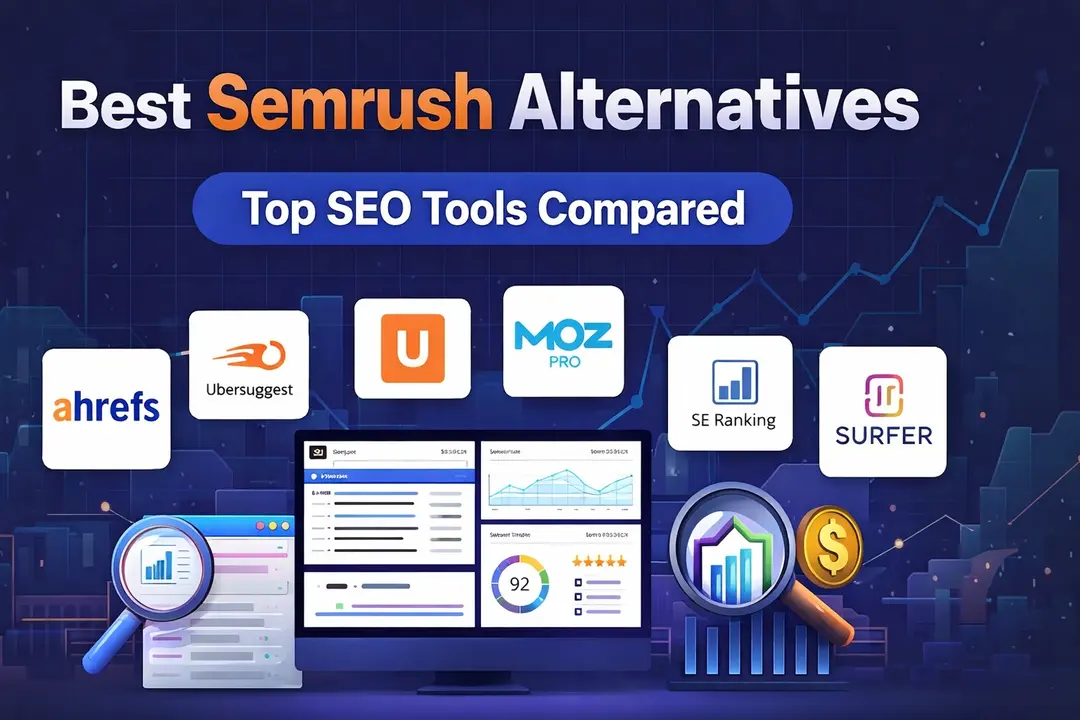
by If you’re searching for Semrush alternatives, you’re likely facing one of three problems: pricing, complexity, or specific feature gaps.
And you’re not alone.
Many small business owners, bloggers, and SEO professionals eventually look for tools that are more affordable, easier to use, or better suited to their workflow.
In this guide, I’ll break down the best Semrush alternatives in 2026, based on real-world usage, feature depth, and value for money.
What Is Semrush and Why Look for Alternatives?
Semrush is one of the most powerful all-in-one SEO tools. It covers:
Keyword research
Competitor analysis
Backlink tracking
Site audits
Content marketing
Why People Search for Semrush Alternatives
Even though it’s powerful, it’s not perfect for everyone.
Common Reasons
High pricing for beginners
Overwhelming interface
Limited usage on lower plans
Not ideal for niche use cases
If you’re just starting out or running a small business, you might not need such a heavy tool.
If you want a broader understanding of SEO platforms, check our detailed guide on Best SEO Tools for Small Businesses (2026 Guide) — it explains which tools work best at different growth stages.
Best Semrush Alternatives (Top Picks for 2026)
Here are the best alternatives based on use case, budget, and performance.
1. Ahrefs
Features
Industry-leading backlink database
Keyword explorer with accurate difficulty score
Content explorer for topic research
Site audit tool
Benefits
Best for competitor analysis
Highly reliable data
Best Use Case
Advanced SEO professionals and agencies
2. Ubersuggest
Features
Keyword research
Site audit
Content ideas
Basic backlink data
Benefits
Affordable pricing
Beginner-friendly interface
Best Use Case
Bloggers and small business owners
3. Moz Pro
Features
Keyword explorer
Domain authority metrics
Rank tracking
Pros and Cons
Pros
Easy to use
Trusted metrics
Cons
Smaller database than competitors
Best Use Case
Beginners and intermediate SEOs
For deeper comparison, see our guide on Moz vs Semrush vs Ahrefs (2026) where we break down accuracy and features in detail.
4. SE Ranking
Features
Rank tracking
Keyword research
Competitor analysis
Website audit
Benefits
Great pricing flexibility
White-label reports
Best Use Case
Freelancers and agencies
5. Mangools (KWFinder)
Features
KWFinder for keyword research
SERP analysis
Backlink tracking
Benefits
Very easy UI
Great for keyword research
Best Use Case
Content creators and bloggers
6. Surfer SEO
Features
Content optimization
AI content editor
SERP analysis
Benefits
Helps rank content faster
Perfect for on-page SEO
Best Use Case
Content-driven SEO strategies
7. SpyFu
Features
Competitor keyword research
PPC insights
SEO reports
Benefits
Great for competitor spying
Affordable
Best Use Case
Marketers focused on competitor analysis
8. Serpstat
Features
Keyword research
Site audit
Rank tracking
Benefits
Budget-friendly
All-in-one solution
Best Use Case
Small teams and startups
9. Rank Math (SEO Plugin)
Features
On-page SEO optimization
Schema markup
Keyword tracking
Benefits
Free version available
Perfect for WordPress users
Best Use Case
Bloggers and website owners
10. Screaming Frog
Features
Technical SEO audits
Site crawling
Broken link detection
Benefits
Very powerful technical tool
Best Use Case
Technical SEO experts
Comparison Table
| Tool | Best For | Pricing Level | Ease of Use |
|---|---|---|---|
| Ahrefs | Advanced SEO | High | Medium |
| Ubersuggest | Beginners | Low | Easy |
| Moz Pro | Balanced SEO | Medium | Easy |
| SE Ranking | Agencies | Medium | Medium |
| Mangools | Keyword research | Low | Very Easy |
| Surfer SEO | Content optimization | Medium | Easy |
| SpyFu | Competitor analysis | Low | Easy |
| Serpstat | All-in-one budget | Low | Medium |
How to Choose the Right Semrush Alternative
Choosing the right tool depends on your needs.
Step-by-Step Decision Guide
If You Are a Beginner
Choose:
Ubersuggest
Mangools
If You Focus on Content SEO
Choose:
Surfer SEO
Frase (optional alternative)
If You Need Full SEO Suite
Choose:
Ahrefs
SE Ranking
If Budget Is Tight
Choose:
Serpstat
SpyFu
Common Mistakes to Avoid
Choosing Based on Price Only
Cheap tools may lack important data.
Ignoring Your SEO Goals
Different tools solve different problems.
Using Too Many Tools
Stick to 1–2 tools to avoid confusion.
Expert Tips to Rank Faster Using These Tools
Focus on Long-Tail Keywords
Use tools to find low-competition keywords.
Analyze Competitors
Steal keyword ideas from competitors.
Optimize Content Properly
Use Surfer SEO or similar tools for on-page SEO.
If you’re interested in AI-powered optimization, our guide on AI SEO Tools for Small Business (2026 Guide) explains how AI can boost rankings faster.
Conclusion
Finding the right Semrush alternative depends on your goals, budget, and experience level.
Beginners should focus on simple tools
Professionals should invest in data accuracy
Content creators should prioritize optimization tools
The key is not just the tool—but how you use it.
Start with one tool, master it, and build your SEO strategy around it.
The best Semrush alternatives in 2026 include tools like Ahrefs, Ubersuggest, SE Ranking, Mangools, and Surfer SEO. Each tool offers different strengths such as keyword research, backlink analysis, or content optimization, making them suitable for different types of users.
You should consider a Semrush alternative if you find it too expensive, complex, or not aligned with your needs. Many alternatives offer similar features at a lower price or with a more user-friendly interface, especially for beginners and small businesses.
Yes, free or low-cost Semrush alternatives like Ubersuggest and Google SEO tools can be very effective for beginners. While they may not offer as much data as premium tools, they are sufficient for keyword research, basic audits, and starting your SEO journey.
Ubersuggest and Mangools are considered the best Semrush alternatives for beginners due to their simple interface, affordable pricing, and easy-to-understand data. They help new users learn SEO without feeling overwhelmed.
Yes, you can rank on Google without using Semrush. SEO success depends more on your strategy, content quality, and consistency rather than the tool itself. Many bloggers achieve strong rankings using affordable or even free SEO tools combined with proper keyword research and optimization.