 by
by Creating videos in one language is easy.
Scaling them globally? That’s where things get complicated.
Hiring voice actors for every language. Syncing lip movements. Editing separate versions. Managing costs.
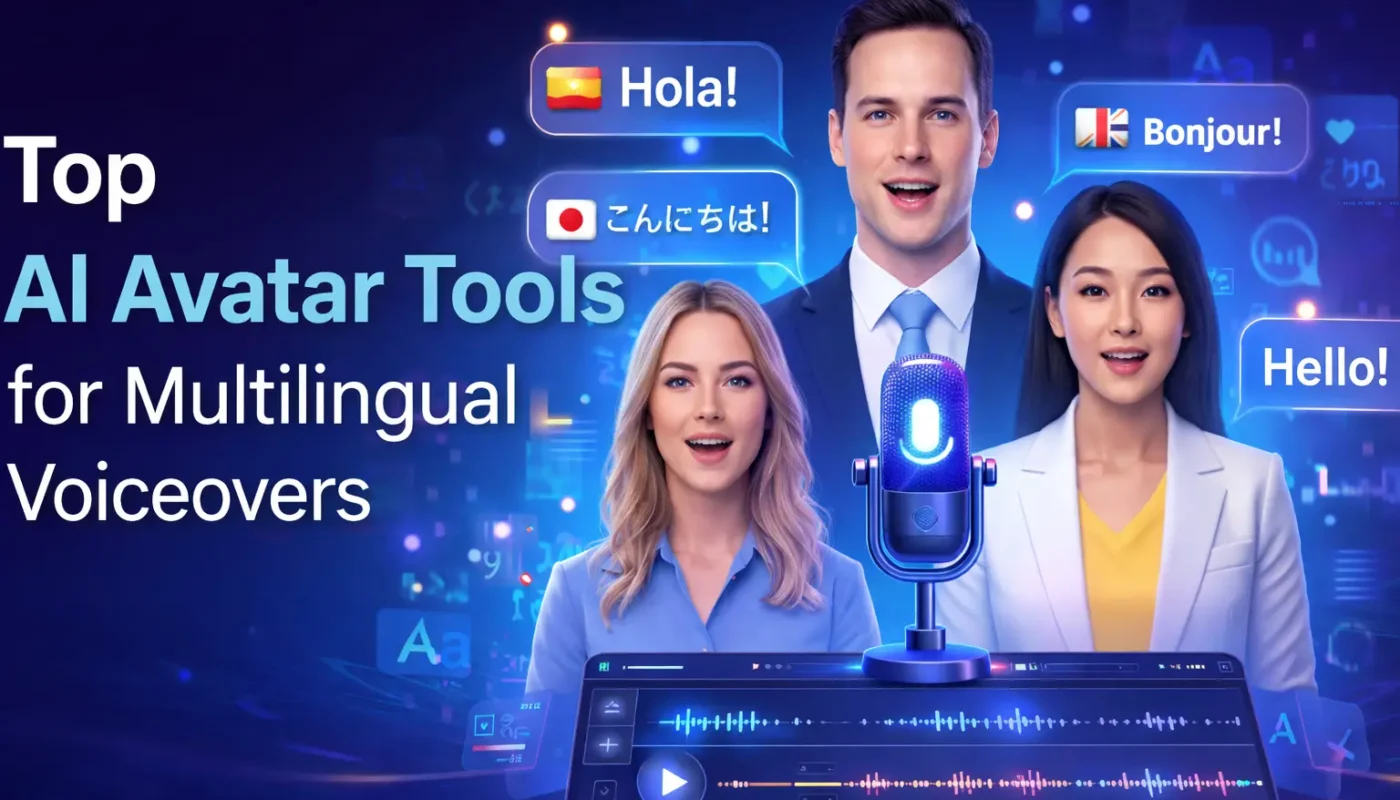
This is exactly why top AI avatar tools for multilingual voiceovers are gaining serious traction in 2026.
They let you create one video — and publish it in 10, 20, even 100+ languages with synchronized AI avatars and realistic voiceovers.
If you’re a content creator, SaaS founder, course seller, or digital marketer, this isn’t just convenient.
It’s a growth advantage.
Let’s break down the tools that actually work — and how to choose the right one.
Why Multilingual AI Avatar Tools Matter for Growth
Global traffic is growing faster than ever.
But most businesses still create content in only one language.
That’s a missed opportunity.
With multilingual AI avatar tools, you can:
Localize YouTube videos
Translate sales pages into video format
Create global product demos
Produce multilingual training content
Scale UGC-style ads internationally
From an SEO perspective, this also supports international content expansion — especially when paired with strong search optimization strategies like the ones I explained in How AI Search Optimization Tools Increase Organic Traffic.
Now let’s look at the tools.
Top AI Avatar Tools for Multilingual Voiceovers
1. Synthesia
Synthesia is one of the most recognized platforms in the AI avatar space.
It allows you to:
Create AI spokesperson videos
Generate voiceovers in 120+ languages
Customize avatars and backgrounds
Upload scripts and auto-sync lip movement
Best for:
Corporate training
Product demos
Internal communication
Global marketing videos
The interface is simple. You paste your script, select a language, choose an avatar, and generate.
2. HeyGen
HeyGen focuses heavily on realistic avatars and multilingual voice cloning.
Key strengths:
High-quality lip-sync
Voice cloning in multiple languages
AI-generated presenters
Personalized video campaigns
This tool works well for:
Personalized sales outreach
Social media marketing
Multilingual UGC-style ads
If you’re building content that supports SEO-driven traffic funnels — similar to how SEO tools compare performance like in Surfer SEO vs Ahrefs: Which SEO Tool Is Better in 2026? — video localization can amplify reach significantly.
3. D-ID
D-ID specializes in turning images into speaking avatars.
You can:
Upload a photo
Add text
Generate voiceovers in multiple languages
Animate the face naturally
This is useful for:
Educational content
News-style presentations
Faceless brand channels
It’s not as polished as full studio-level avatars, but it’s flexible and creative.
4. Colossyan
Colossyan focuses on business and e-learning.
It supports:
Multiple languages
Script-based AI avatars
Scene switching
Custom branding
If you’re creating multilingual onboarding or internal training videos, this platform is efficient and scalable.
5. DeepBrain AI
DeepBrain AI is strong in realism.
It offers:
Hyper-realistic avatars
Multilingual voiceovers
Studio-style output
Broadcast-ready content
This is better suited for:
Professional presentations
Corporate announcements
News-style video content
How to Choose the Right AI Avatar Tool
Choosing from the top AI avatar tools for multilingual voiceovers depends on your goal.
If you want simple marketing videos:
→ Go with Synthesia or HeyGen.
If you want personalized outreach:
→ HeyGen is strong in customization.
If you want creative flexibility:
→ D-ID works well.
If you’re building corporate training:
→ Colossyan or DeepBrain AI.
The tool should match the business objective — not just the feature list.
Practical Workflow for SEO + Multilingual Video Strategy
Here’s a powerful growth workflow:
Identify ranking blog posts using SEO tools.
Repurpose them into short multilingual AI avatar videos.
Publish on YouTube and embed into blog posts.
Target international search queries.
For keyword research and competitor breakdown, platforms compared in Moz vs Semrush vs Ahrefs (2026): Features, Pricing & Accuracy Compared help identify multilingual keyword opportunities.
This creates:
More engagement
Lower bounce rate
Stronger brand authority
Expanded global reach
Common Mistakes to Avoid
AI avatar tools are powerful — but misuse is common.
Avoid:
Publishing raw AI scripts without editing
Ignoring cultural tone differences
Using robotic voice settings
Translating without localization
Creating videos without SEO keyword alignment
AI should enhance your strategy, not automate it blindly.
Are Multilingual AI Avatar Tools Worth It?
If you’re serious about:
International expansion
Scalable content production
Repurposing blog content into video
Growing multilingual audiences
Yes.
But if you only publish occasionally, the investment may not justify the cost.
Start small. Test one platform. Measure engagement.
Then scale.
Conclusion
The top AI avatar tools for multilingual voiceovers are changing how businesses communicate globally.
You no longer need separate production teams for every language.
With the right workflow, you can:
Create once
Translate instantly
Publish everywhere
Scale internationally
For SEO-focused businesses, combining AI video tools with strong search optimization creates a powerful content engine.
If you’re exploring AI tools seriously, you may want to check other in-depth comparisons and SEO strategy guides available across this site.
Scaling content isn’t about doing more.
It’s about doing it smarter.
Synthesia, HeyGen, D-ID, Colossyan, and DeepBrain AI are among the top platforms for multilingual AI video generation.
For many business use cases, yes. But for emotional storytelling or cinematic production, human voices still perform better.
Most leading platforms support 40–120+ languages, depending on the provider.
Indirectly, yes. They improve engagement, support international content expansion, and increase video reach.
Some platforms like HeyGen offer voice cloning features, often depending on pricing plans.